Skip to content
Nested Causal Modelling: Solving Impossible Problems by Sid J.A. Hubbard book cover.

New Book Available Now

Nested Causal Modelling

Three Books in One: The Zero Infinity, Nested Causal Modelling and The Final Frontier. All three books in the Nested Causal Modelling series that operationalizes the methods used in designing structural interventions and solving impossible problems.

Buy on Amazon Listen to the Audio Book

Briefing Materials

Critical Approaches to Model Driven Systems

Structural Intervention

The Interventionist Class

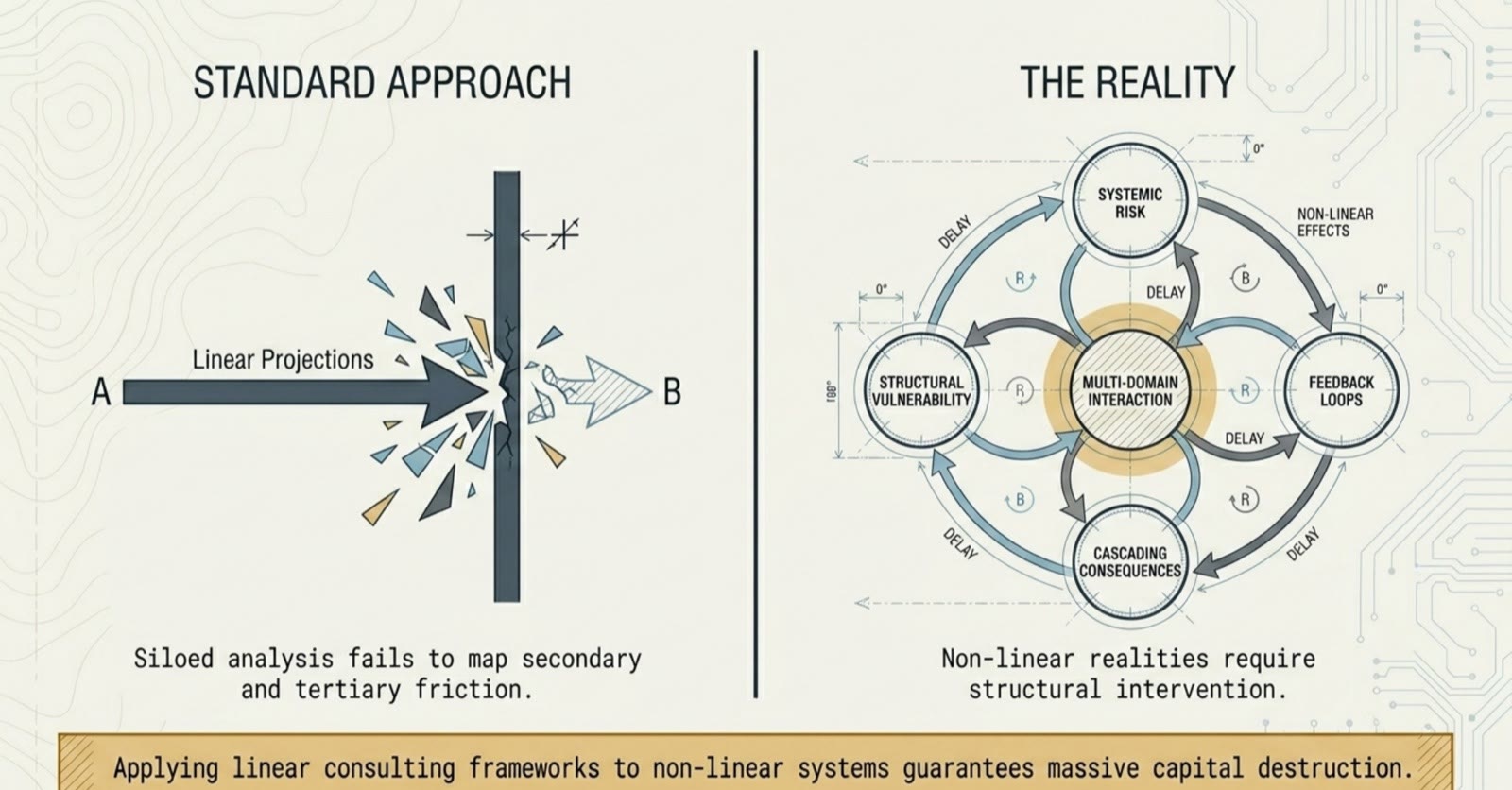
Systemic problems cannot be isolated.

Traditional diagnostic tools break down when variables, feedback loops, delays, and cascading consequences interact. Sid builds causal frameworks that expose where pressure is accumulating and where intervention can actually change the system.

Class
Interventionist
Specialty
Novel causal frameworks spanning economics, governance, mathematics, and AI.
Output
Semantic information systems and contextual engagement platforms.
Diagram contrasting a linear standard approach with a non-linear systemic reality.

Operating Field

From visible failure to hidden leverage.

01

Capital Risk

Map where resources are trapped by structural friction instead of productive flow.

02

Compressed Time

Track delays, deadlines, and escalation paths before they collapse optionality.

03

Multi-Domain Complexity

Unify governance, economics, technology, and operational realities in one causal model.

04

Intervention Point

Locate the precise structural change with the highest probability of resolving failure.

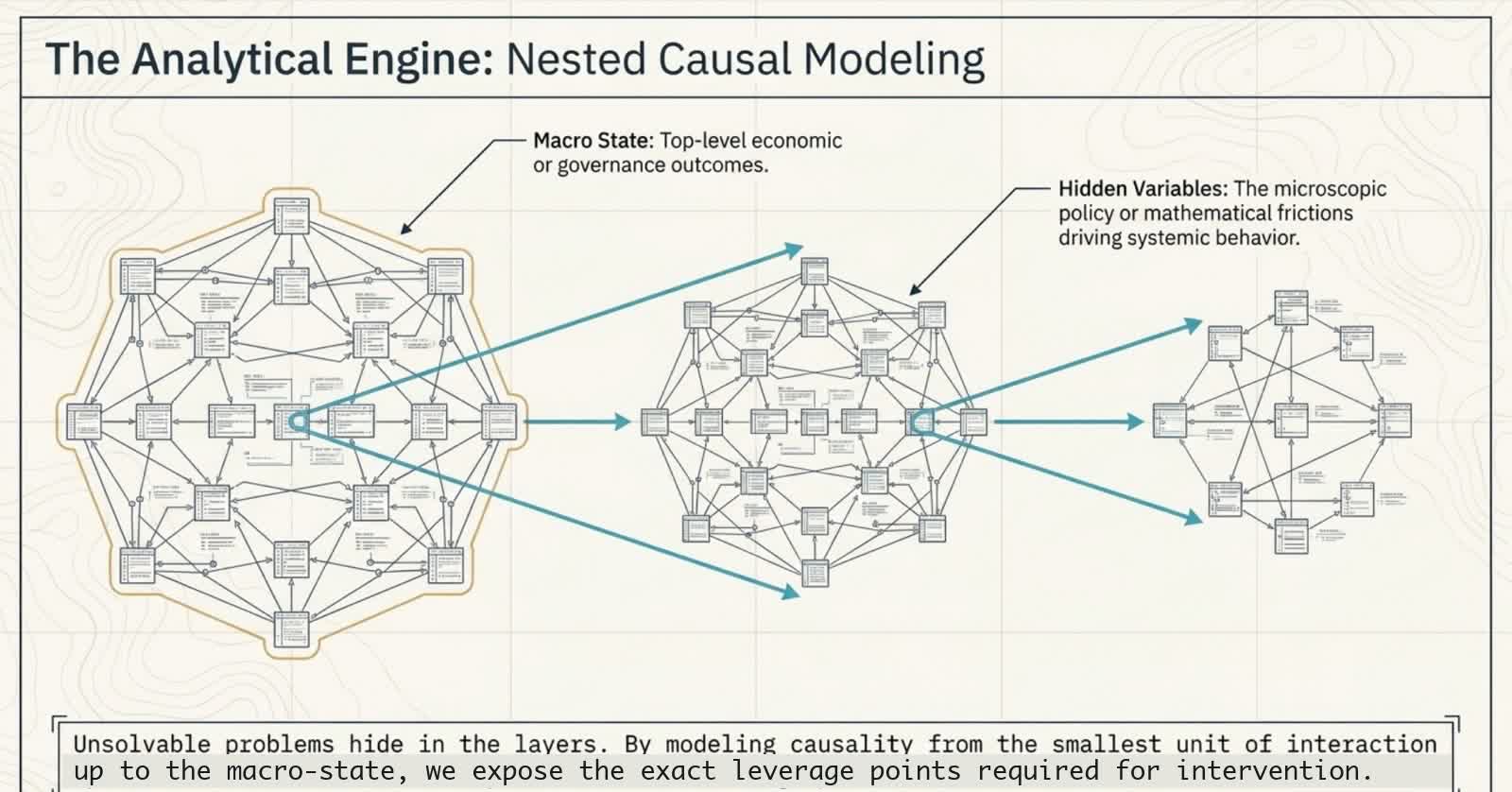
Nested causal modeling diagram moving from macro state to variables.

Analytical Engine

Nested causal modeling finds the problem inside the layers.

Unsolvable problems hide in scale transitions. By modeling causality from the smallest unit of interaction up to the macro-state, the system reveals exact leverage points for intervention.

Technical Pipeline

Theory becomes useful when it becomes infrastructure.

Step 1

Raw Theory

Complex systems analysis and mathematical frameworks.

Step 2

Code + Data

Translate frameworks into executable scripts and repeatable data flows.

Step 3

Open Infrastructure

Shape the work into auditable repositories, models, and semantic maps.

Step 4

Deployment

Deliver semantic systems and contextual engagement platforms.